


Technical SEO is the process of ensuring your website can be found, accessed, understood, and ranked by search engines — independent of what your content says or how many links point to your site.
Think of your website as a building. Your content is the interior design. Your backlinks are word-of-mouth. Technical SEO is the foundation, the wiring, and the structural integrity. If any of these fail, nothing else works — no matter how good the interior looks.
Technical SEO serves three functions: enabling search engines to crawl your pages, ensuring those pages get indexed correctly, and delivering a fast, secure, stable experience that Google rewards with rankings.
In 2026, the meaning of technical SEO extends beyond Google. AI search systems — Google AI Overviews, Perplexity, ChatGPT — crawl websites using many of the same technical signals. A technically sound site is accessible to both traditional and AI-powered search simultaneously. For a law firm in Montreal, a plumbing company in Edmonton, or an e-commerce brand in Vancouver, this is the invisible infrastructure that determines whether Google.ca can find and recommend you.
Every SEO strategy rests on three interconnected disciplines. Removing any one weakens the others.
The analogy: technical SEO is the roads and infrastructure — can people reach your store? On-page SEO is the store itself — is what's inside clear and useful? Off-page SEO is reputation and word-of-mouth — do other people vouch for you?
Technical SEO focuses on site infrastructure: crawlability, speed, indexation, and security. It is primarily controlled by developers and SEO specialists and must be solved first — it is the foundation on which everything else sits. On-page SEO vs. technical SEO is not a rivalry — on-page focuses on content and keywords, is controlled by your content team, and delivers full value only once the technical foundation is solid. Off-page SEO focuses on external authority through backlinks and citations, and is the last layer to build — it amplifies a site that is already technically sound and content-rich.
A technically perfect site with no content ranks for nothing. Great content on a broken technical foundation never gets indexed.
What about local SEO? Local SEO is not a fourth pillar — it is a specialized application of all three. A local Canadian business needs technical SEO (fast mobile loading, correct indexation), on-page SEO (location keywords, service pages), and off-page SEO (Google Business Profile, local citations). You cannot do local SEO well without a solid technical foundation.
This is where generic guides fall short. Canadian businesses face a specific technical SEO context that US-centric content never addresses.
Most SEO guides are working from outdated frameworks. Here is what has changed that actually matters.
INP is now the active Core Web Vital. FID (First Input Delay) was retired in March 2024. INP (Interaction to Next Paint) is now enforced. Many sites that passed Core Web Vitals under FID are failing under INP — particularly JavaScript-heavy sites. Any audit tool still referencing FID is obsolete.
Google's December 2025 Rendering Update. Google clarified that pages that return non-200 HTTP status codes may be excluded entirely from its rendering pipeline. E-commerce sites and WordPress installations with custom 404 logic may find that content is never seen by Googlebot.
AI crawler governance in robots.txt. In 2026, robots.txt is a governance document, not just a crawl instruction file. Businesses must now decide independently whether to allow AI training bots (e.g., GPTBot, Google-Extended) and AI retrieval bots (e.g., PerplexityBot, ClaudeBot). Allowing retrieval bots increases your chance of being cited in AI answers. These are separate decisions with different implications.
GEO and AI-readiness. AI systems prefer content that is clearly headed, concisely written, and schema-marked. Technical SEO in 2026 is about being machine-readable to AI discovery systems, not just ranking in Google's traditional index.
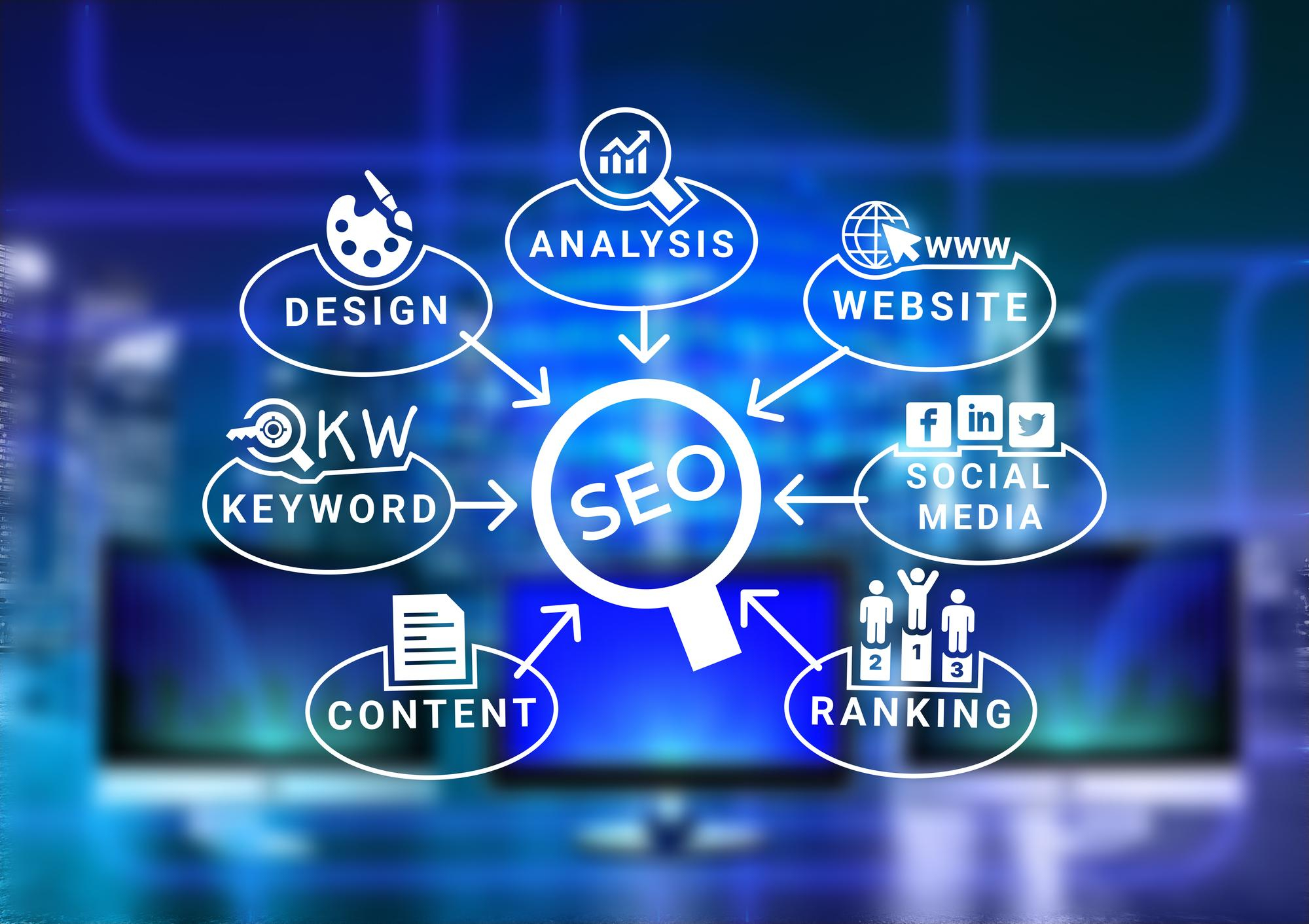
Technical SEO is not a flat checklist — it is a hierarchy. Crawlability is foundational; structured data and URL structure are amplifiers. Google must crawl before it indexes. It must index before it ranks. The order is not arbitrary.
Crawlability is Googlebot's ability to discover and access your pages. If Googlebot cannot reach a page, that page does not exist in Google's eyes. Key factors: robots.txt configuration, internal linking structure, and crawl budget management on large sites. In 2026, AI crawlers (GPTBot, PerplexityBot, ClaudeBot) also respect robots.txt — your crawlability decisions now affect AI search visibility too.
A crawled page is not automatically indexed. Google evaluates quality and duplication before deciding whether to add a page to its searchable database. An XML sitemap — submitted in Google Search Console — helps Googlebot discover and prioritize your most important pages. Canadian bilingual sites should maintain separate EN and FR sitemaps, each submitted individually in GSC.
Three Google-defined metrics measure real user experience: LCP (loading speed) under 2.5s, INP (interactivity) under 200ms, and CLS (visual stability) below 0.1. These are ranking signals. Canadian users on mobile connections outside major metro areas experience slower load times than lab tools measure — field data in GSC reflects real Canadian performance.
Page speed is a direct ranking signal and a conversion factor. Key sub-factors: TTFB under 600ms, render-blocking resources, images in WebP or AVIF format, and unused JavaScript. For Canadian businesses with visitors across Vancouver, Toronto, Montreal, and Calgary, a Canadian CDN node reduces load time without any server reconfiguration.
Google ranks your mobile version. If your mobile experience is inferior to your desktop experience, you are ranked based on the inferior version. Requirements: responsive design, tap targets minimum 48px, no content hidden on mobile that exists on desktop, no intrusive interstitials. In 2026, mobile is the primary concern — desktop is secondary by Google's own indexing logic.
Google has used HTTPS as a ranking signal since 2014. In 2026, HTTP pages display "Not Secure" in Chrome before any content is read. For Canadian businesses handling contact forms, ecommerce transactions, or account logins, HTTPS is also a PIPEDA compliance baseline — not just an SEO requirement. Most Canadian hosts (SiteGround, Cloudflare, WP Engine) offer one-click SSL at no extra cost.
Structured data helps Google and AI systems understand your content in a machine-readable format. It enables Rich Results, AI Overview citations, and Knowledge Panel associations. Key schema types for Canadian businesses: LocalBusiness (address, hours, phone), FAQPage, Article, and Product. AI retrieval systems prefer clearly labeled, schema-marked content over unstructured long-form paragraphs.
Clean, descriptive URLs help both users and search engines understand page content before visiting. Internal links enable Googlebot to discover pages, distribute PageRank, and establish topical relevance. Orphan pages — those with no internal links — cannot be discovered through crawling regardless of content quality. On bilingual Canadian sites, EN pages should link to EN pages and FR pages to FR pages to preserve language attribution signals.
Understanding the 8 pillars is step one. Knowing which ones are broken on your specific site is step two.
Results depend on which issues are being fixed.
Important: technical SEO removes barriers — it does not create rankings on its own. After barriers are removed, content quality and link authority determine how high pages rank. Small local Canadian sites (under 100 pages) in low-competition markets often see measurable improvement within 6–8 weeks of fixing critical issues.
Direct answer: Some of it is genuinely technical. Some of it is not.
Manageable without a developer:
Requires developer or specialist involvement:
A technical SEO agency does not just execute fixes — it diagnoses the specific issues causing ranking suppression, prioritizes them by impact, and writes developer-ready specifications to ensure fixes are implemented correctly the first time.
Blocking the site in robots.txt. A developer adds Disallow: / during a build and forgets to remove it at launch. Google cannot crawl a single page. This has happened to major Canadian brands.
Optimizing the desktop while ignoring the mobile. A site loading in 1.2 seconds on desktop but 5 seconds on mobile is a mobile-speed failure. Google ranks the mobile version.
Skipping hreflang on bilingual sites. Without hreflang, Google guesses which language version to serve to which user — and frequently guesses wrong. French content appears in English results. This is silent, invisible traffic loss.
Publishing content that Google cannot index. A noindex tag added during development and never removed can wipe entire sections of the site from search results. The site looks live to users but does not exist to Google.
Treating a technical audit as a one-time event. Plugins update. Developers push code. A technical audit from 18 months ago tells you nothing about your site's current state.
If any of these sound familiar, a professional technical SEO assessment is the fastest way to confirm and fix them.

Growth Hacker's technical SEO services for Canadian clients receive work built around Google.ca ranking behaviour, bilingual hreflang requirements for EN/FR sites, Canadian CDN considerations, and the specific technical issues that arise from Canadian-hosted platforms. Every engagement starts diagnostically — identifying which specific issues are actively suppressing rankings, not running a generic checklist scan.
What clients receive: a severity-tiered technical assessment, developer-ready fix specifications, Core Web Vitals baseline and improvement targets, and a prioritized implementation roadmap that maximizes ranking impact per developer hour. If your site has technical issues you cannot identify or do not have time to fix, start with a free assessment. We will tell you what is wrong and what to fix first.
Technical SEO refers to the optimization of a website's infrastructure — crawlability, indexation, speed, security, and structured data — so search engines can access, understand, and rank its pages. It is distinct from on-page SEO (content and keywords) and off-page SEO (backlinks). It is the foundational layer that determines whether the other two disciplines can function at all.
"Regular SEO" encompasses the full discipline: on-page, off-page, and technical SEO combined. Technical SEO is one layer within that ecosystem. A business can run excellent content and link-building programs while its technical foundation silently suppresses rankings. An agency offering SEO services without specifically addressing technical SEO is operating with an incomplete toolkit.
Some aspects are accessible to non-developers — sitemaps, SSL, image compression, and basic schema. Others — Core Web Vitals optimization, hreflang for bilingual sites, JavaScript SEO, log file analysis — require developer skills or specialist involvement. The practical answer: handle the basics yourself, but diagnosing which issues are causing ranking suppression and prioritizing them correctly is where specialist expertise pays off.
Technical SEO is the infrastructure discipline — it applies to all websites regardless of geographic target. Local SEO is a strategy for ranking in location-based searches. Local SEO uses technical SEO as its foundation: a local business needs fast load times, correct indexation, and LocalBusiness schema as part of its local SEO strategy. For a technical SEO audit, Canadian businesses should treat both as interconnected rather than separate.
Google Search Console is the free starting point. The Coverage report shows indexation errors, the Core Web Vitals report flags performance failures, and the Mobile Usability report identifies mobile issues. Warning signs for non-technical owners: pages missing from Google results, a sudden drop in traffic after a site update, "Not Secure" warnings in Chrome, or Core Web Vitals failures in GSC.
Technical SEO is the layer of optimization that determines whether everything else you invest in — content, links, keyword strategy — actually reaches Google. A well-written page on a technically blocked site does not rank. A link-earning asset on a slow, mobile-broken domain does not convert that authority into positions. The technical foundation either enables everything above it or quietly undermines it.
For Canadian businesses, two technical considerations carry more weight than generic guides consistently acknowledge. Mobile-first indexing means Google is ranking your mobile version — and most Canadian sites are still built and tested primarily on desktop. Hreflang for bilingual EN/FR sites is not a technical nicety; it is the mechanism that determines whether your French-language content reaches Quebec searchers at all. Getting either wrong means paying for content and links that never deliver their full return.
The 8 pillars in this guide — crawlability, indexation, Core Web Vitals, site speed, mobile optimization, HTTPS, structured data, and URL structure — are not equally urgent on every site. The correct approach is to identify which specific issues are causing active suppression on your site right now, fix those first, and address the rest in order of impact.
Most Canadian businesses have two or three technical issues that are doing the real damage. The challenge is identifying which ones they are before developers spend time on the wrong problems.


LANCEZ-VOUS !
Notre Agence de référencement se consacre à fournir des produits haut de gamme Services de référencement, services de référencement locaux, Consultation SEO, et Amélioration du référencement. Grâce à notre approche globale, nous veillons à ce que votre entreprise prospère dans le paysage numérique. Laissez-nous vous aider à atteindre votre Marketing SEO objectifs grâce à nos solutions personnalisées.

.svg)
.svg)

.png)
.png)



.svg)
.svg)